A fridge dispenser is supposed to fill a glass in five or six seconds. When it starts taking twenty — a sad ribbon of water while you stand there holding the button like you’re waiting for an elevator — something upstream is choking the flow. The good news: it’s almost never a broken fridge. Most of the time it’s one of five things, four of which you can fix yourself in about ten minutes, no tools beyond your own hands.
They’re sorted from most likely to least — and the first one is the culprit about eight times out of ten.
Your water filter is a cartridge packed with carbon, and every gallon leaves a little sediment behind. Six months in, that carbon is clogged enough to strangle the flow — the dispenser slows down weeks before the water tastes any different, which is why nobody suspects the filter first. Everyone suspects the filter last.
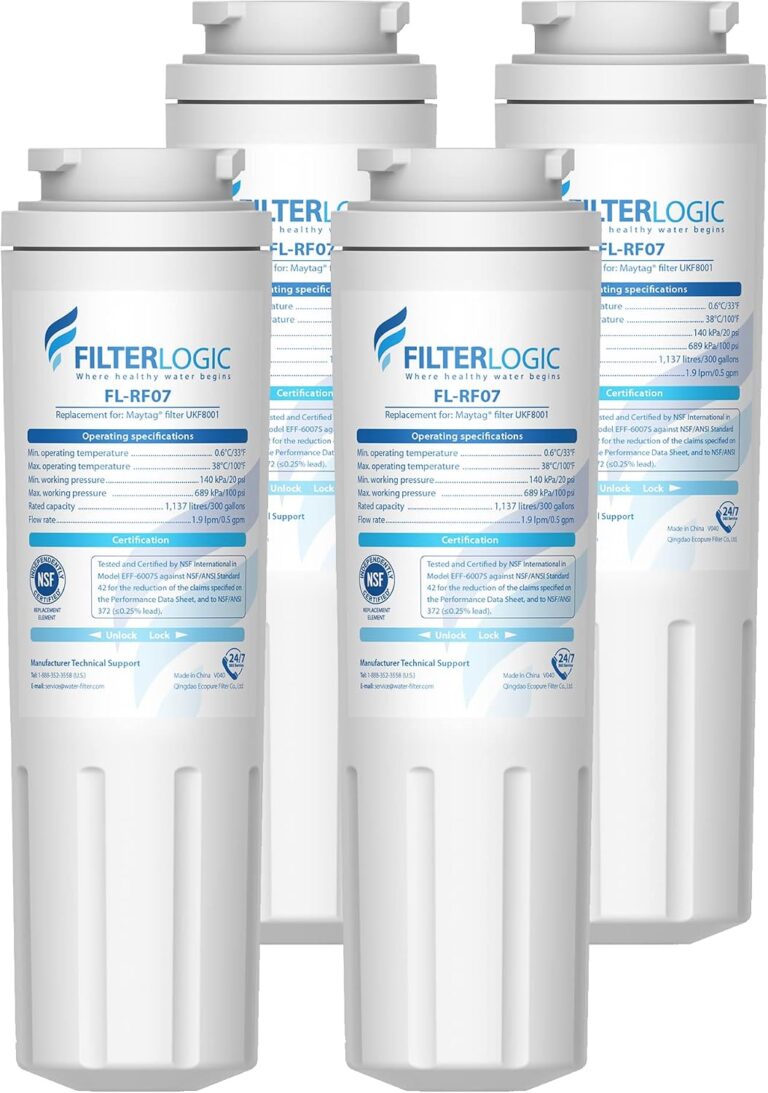
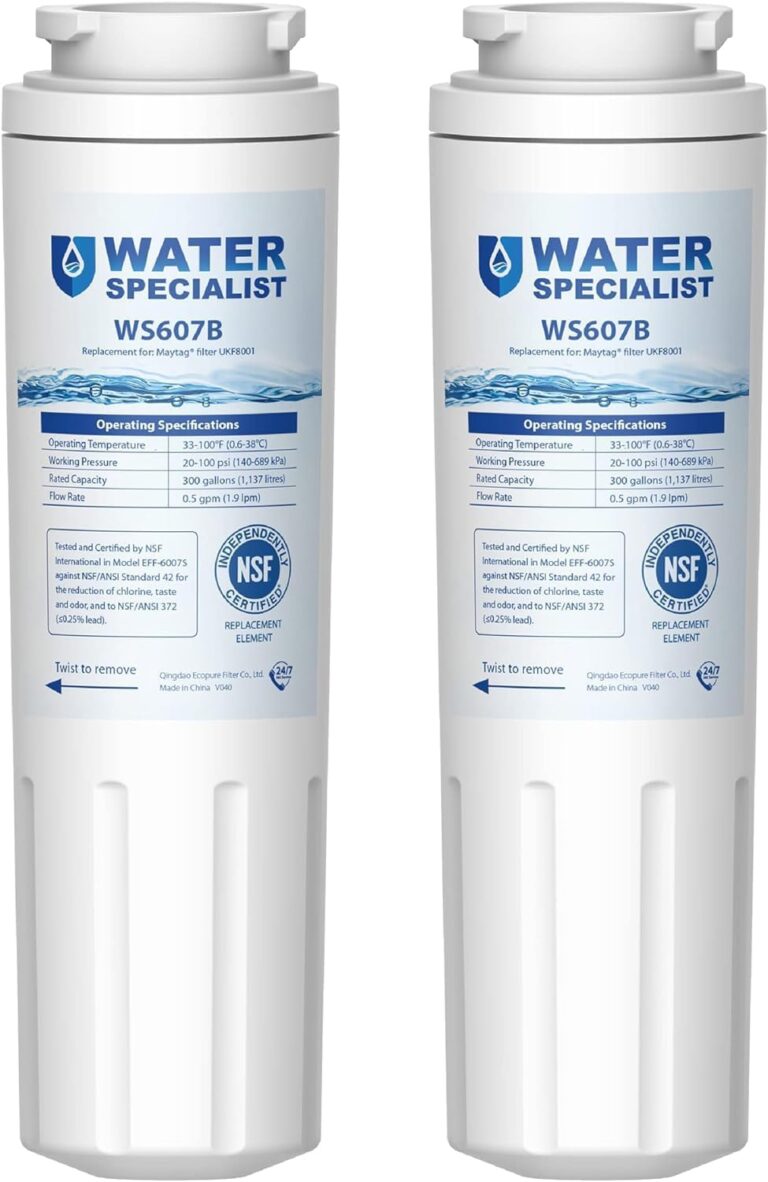
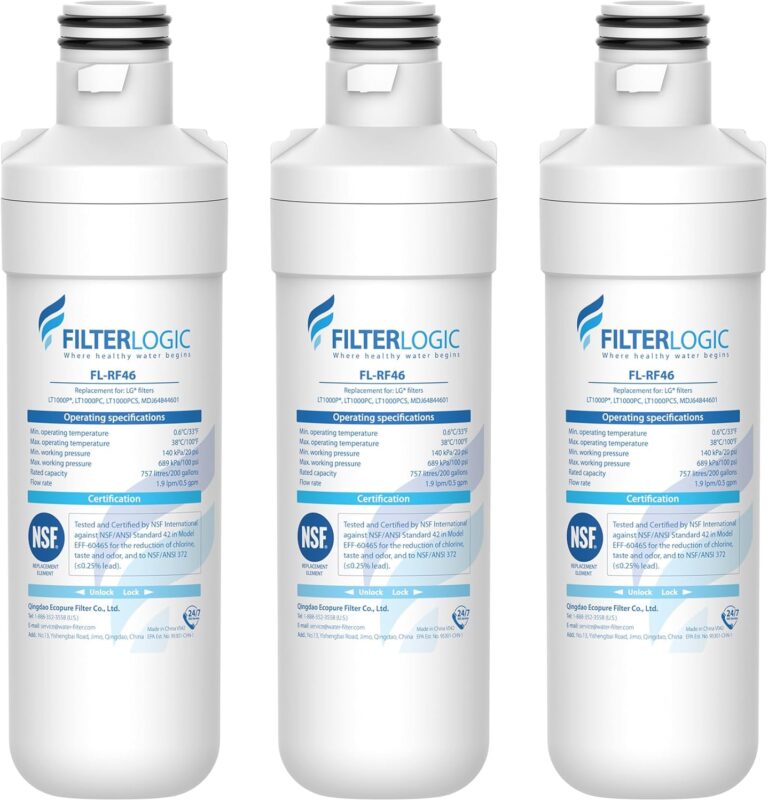
Can’t remember when you last changed it? That is the diagnosis. Swap it and the flow usually comes back like someone opened a tap. If you’re not sure which filter your fridge takes, our brand-by-brand filter comparison sorts it out in a couple of minutes, or jump straight to Find Your Filter with your fridge’s model number.
Dispenser got slow right after a filter change? The cartridge probably isn’t fully home. Most filters need a firm push and a confident quarter- to half-turn until they stop — hesitate and the internal valve only half-opens. Pull it out, check the O-rings aren’t pinched or rolled, and reinstall until it clicks or locks.
While you’re in there, make sure it’s the right part number and not a lookalike from a different family — a filter that “sort of fits” flows like it sort of fits.
Every filter change lets a slug of air into the water system, and air pockets make the dispenser sputter, spit, and dribble. The fix is gloriously low-tech: run water through the dispenser for two to three minutes (a couple of gallons), pausing every 30 seconds. This flushes the air out and, bonus, clears the harmless carbon dust a fresh filter sheds. Manufacturers tell you to do this in the manual nobody reads.
On fridges that route the water line through the freezer door, an icy plug can pinch flow down to a trickle — classic sign: ice still dispenses fine, water barely does. Check that your freezer isn’t set colder than about 0°F (-18°C). If the line’s already frozen, unplug the fridge and leave the freezer door open for a couple of hours, or press a warm (not hot) cloth along the inside door panel. Then nudge the freezer temperature up a notch so it doesn’t refreeze next week.
Slide the fridge out and look behind it. The thin supply tube can kink when the fridge gets pushed back after cleaning or a move, and the little shutoff valve it connects to (under the sink or at the wall) is often sitting half-open because whoever installed it stopped turning early. Straighten the tube, open the valve all the way, and check the tube isn’t crushed under a wheel. You’d be amazed how often “my dispenser died” ends here, embarrassed.
If you’ve swapped an overdue filter, reseated it, flushed the air, ruled out ice, and the line behind the fridge is straight with the valve wide open — you’re down to the water inlet valve on the back of the fridge or genuinely low household water pressure. The inlet valve is a $30–$50 part, but replacing it means a multimeter and disconnecting water lines, so that one’s a judgment call between a confident DIY afternoon and a repair visit.
Slow flow is your fridge’s way of saying the filter’s done — it just says it weeks before your taste buds do. Change the filter every six months (here’s how to tell when yours is due), flush the line after every swap, and the dispenser stays fast.
And since you’re buying that filter twice a year for the life of the fridge, it pays to not overpay for it.
Same filter, different prices at every store — see them side by side.







Leave Comment